
Chain Engine
Chains
Create and manage saved chain definitions for the Chain Engine runtime.
Saved chains define the ordered route that runtime traffic should use.
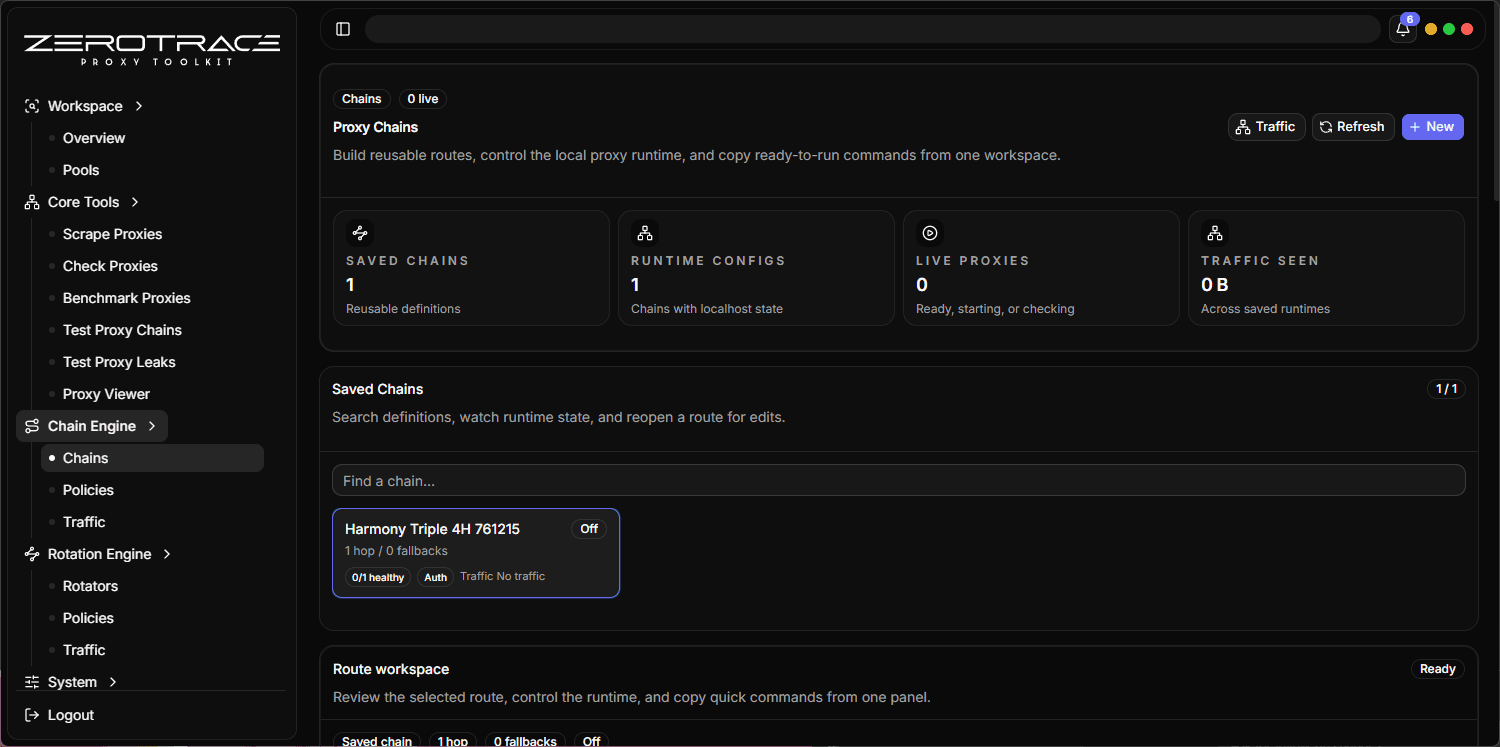
Chain Fields
| Field | Meaning |
|---|---|
| Name | Human-readable chain name. |
| Notes | Context for how or why the chain was created. |
| Tags | Labels such as harmony, manual, fallback, or stable. |
| Primary hops | Ordered proxy hops used for the main route. |
| Hop label | Optional label for readability in traffic and editing. |
| Fallback chain IDs | Other saved chains to try when fallback is enabled and primary route fails. |
| Policy ID | Runtime policy assigned to the chain. |
Hop Order
Hop order matters. A chain like:
proxy-a -> proxy-b -> targetis not the same as:
proxy-b -> proxy-a -> targetUse Chain Tester results to preserve the working order.
Fallback Chains
Fallback chains are saved chain definitions referenced by another chain. The engine validates the fallback graph and prevents:
- missing fallback chain references
- fallback cycles
- deleting a chain while it is still used as a fallback
Complete Chain Definition Fields
| Field | Detail |
|---|---|
| ID | Stable local chain identifier. |
| Name | Human-readable label in lists and runtime snapshots. |
| Notes | Free-form context for source, target, or test result notes. |
| Tags | Search/filter labels such as harmony, manual, fallback, stable, or country hints. |
| Primary hops | Ordered proxy hop list used by the primary route. |
| Hop proxy string | The normalized proxy string for each hop. |
| Hop label | Optional label that makes traffic and editing easier to read. |
| Fallback chain IDs | Other saved chains the runtime may try when fallback is enabled. |
| Policy ID | Policy assigned to the runtime route. |
| Timestamps | Created and updated timestamps for workspace memory. |
Naming Pattern
Good chain names:
Harmony A US exitManual socks-http chainFallback EU routeLow latency chain 2 hop
Add hop labels when chains get long. They make runtime traffic easier to read later.