
Chain Engine
Runtime and Traffic
Start Chain Engine local endpoints and read runtime traffic logs.
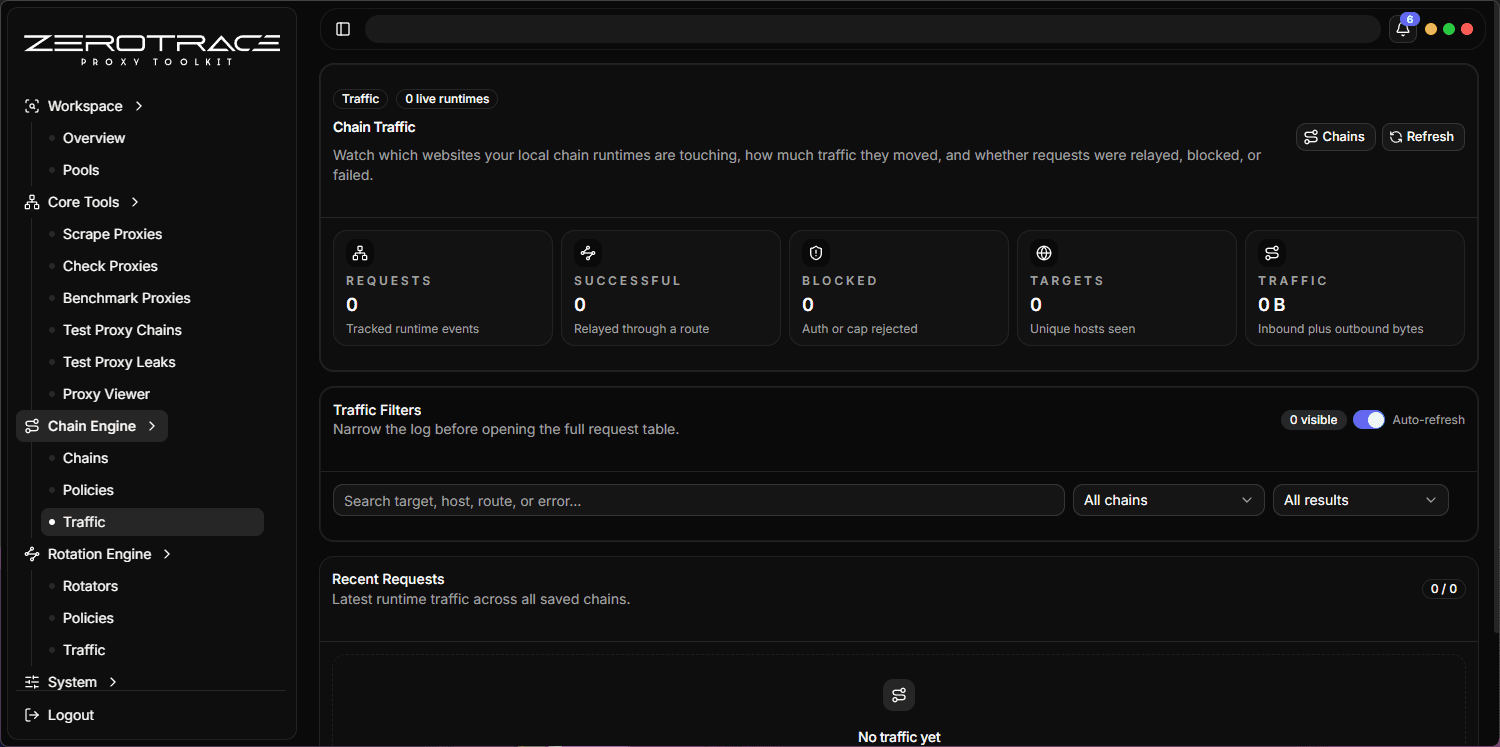
Chain runtimes expose local proxy endpoints and record recent traffic.
Runtime Endpoint
The runtime binds to:
127.0.0.1:<bound-port>If the requested port is unavailable, ZeroTrace Proxy binds a random local port and records a notice.
Runtime Snapshot
| Field | Meaning |
|---|---|
| Endpoint URL | Local URL clients should use. |
| Requested port | Port you asked for. |
| Bound port | Port actually used. |
| Active chain | Chain currently selected. |
| Route count | Number of routes including fallback chains. |
| Healthy route count | Routes currently considered healthy. |
| Last exit IP | Most recent observed exit IP. |
| Request/success/failure count | Runtime totals. |
| Switch count | Number of route switches. |
| Bytes received/sent | Runtime traffic totals. |
Traffic Entries
Traffic log entries include:
- method
- target host
- target URL
- status code
- request bytes
- response bytes
- duration
- success flag
- error message
- chain and route names
- timestamps
The Chain Engine keeps the latest 500 traffic entries.
Runtime Details
| Detail | Meaning |
|---|---|
| Listener | Local HTTP proxy and CONNECT tunnel listener. |
| Bind host | Always binds to 127.0.0.1. |
| Requested vs bound port | Requested port is what you asked for; bound port is what the runtime actually got. |
| Health timestamp | Shows when health was last checked. |
| Active route | Primary or fallback route currently serving traffic. |
| Counters | Request count, success count, failure count, switch count, bytes received, and bytes sent. |
| Byte counting | Counts normal forwarding and CONNECT tunnel bytes. |
| Log cap | New entries replace old ones after the latest 500 entries. |
Auth and Bandwidth
When policy auth is enabled, clients must provide Basic proxy credentials. When bandwidth limit is reached, the runtime responds with status 509 and records the bandwidth-limit error.
When a client cannot connect, verify the bound port first. The requested port may differ if ZeroTrace Proxy had to fall back.